What Was the Great Depression? Stunning Lessons & Hope
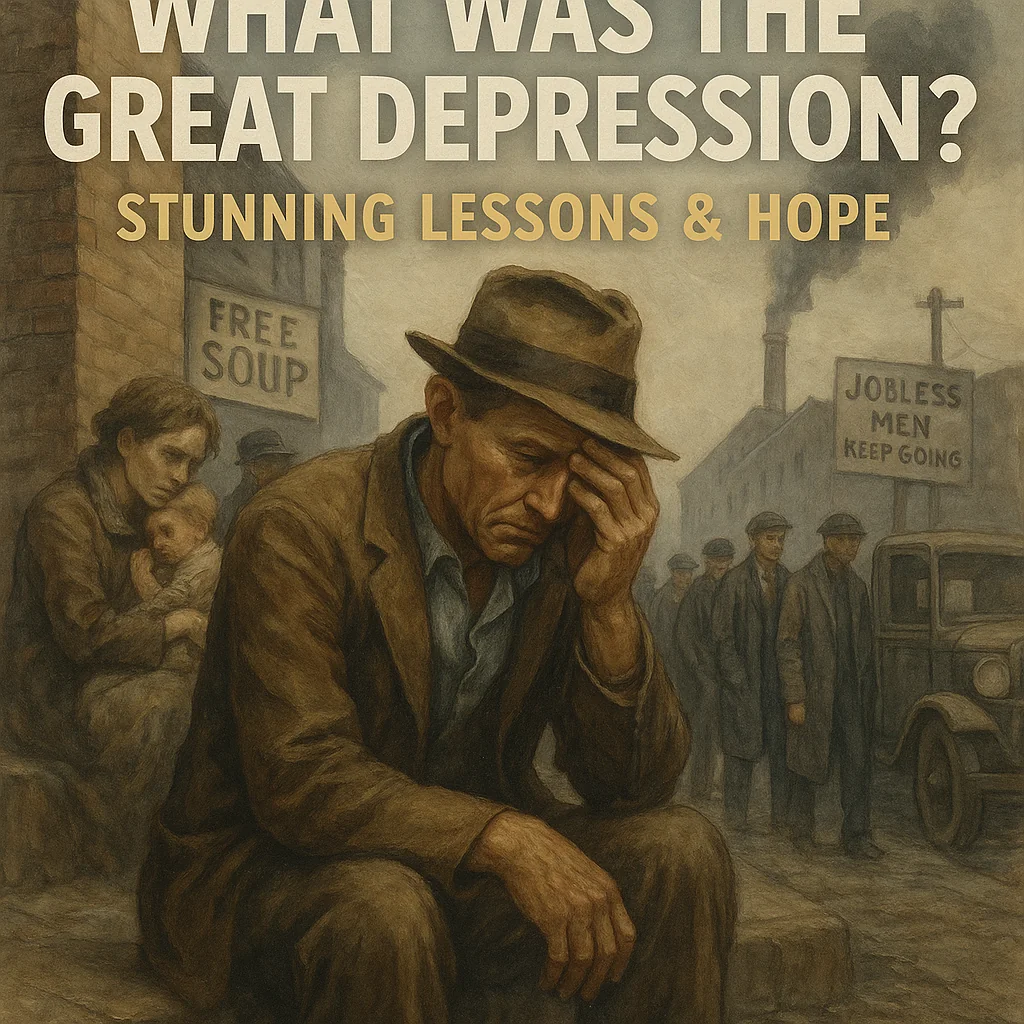
The Great Depression was the worst economic downturn in modern history. It began in 1929, spread across many countries, and changed how people thought about money, work, and government.
It was not just a stock market crash or a few bad years. It was a long crisis that closed factories, wiped out savings, and pushed millions of people into poverty. Its impact still shapes economic policy and debates today.
Basic Overview of the Great Depression
The Great Depression was a global economic crisis that ran through the 1930s. It started in the United States and then spread to Europe, Latin America, and other regions through trade, finance, and falling demand.
Prices dropped, wages fell, and unemployment reached record levels. Many people who had felt secure in the 1920s suddenly lost their jobs, homes, and savings. Governments struggled to respond because they had never faced a downturn on this scale.
When and Where Did the Great Depression Happen?
Most historians date the start of the Great Depression to October 1929, when the U.S. stock market crashed. The downturn then deepened and lasted in many places until the late 1930s or early 1940s.
The United States was at the center of the crisis, but it did not suffer alone. Countries like Germany, the United Kingdom, Canada, and Australia also saw huge drops in output and employment. Export-dependent economies, such as many in Latin America, felt heavy shock as global trade collapsed.
Key Phases of the Great Depression
The table below gives a short overview of main phases and turning points of the Great Depression in the United States and other major economies.
| Year | Event | Short Description |
|---|---|---|
| 1929 | Stock Market Crash | U.S. stock prices collapse in October; banks and investors suffer large losses. |
| 1930–1931 | Bank Failures Spread | Many banks close; credit dries up; businesses lose access to loans. |
| 1932–1933 | Peak Unemployment | Unemployment in the U.S. reaches about 25%; global trade falls sharply. |
| 1933–1936 | New Deal and Reforms | U.S. government launches public works, financial controls, and social programs. |
| 1937–1938 | Recession Within Recovery | Spending cuts and policy shifts cause another dip in production and jobs. |
| 1939–Early 1940s | Recovery and War Economy | Massive government spending for World War II boosts output and employment. |
While the exact timing differed from country to country, most economies saw a sharp downturn around 1929–1932 and only regained pre-crisis levels of output many years later. The shock was slow to build, deep in effect, and slow to fade.
Main Causes of the Great Depression
The Great Depression grew from a mix of financial, economic, and policy errors. No single factor explains it alone. Several forces came together and turned a normal downturn into a long crisis.
The list below outlines major causes that many historians and economists agree played key roles in triggering and deepening the Great Depression.
- Stock market bubble and crash: During the late 1920s, stock prices in the U.S. rose much faster than company profits. Many people bought shares on credit, hoping prices would keep climbing. When confidence broke in October 1929, prices plunged and many investors lost more than they could pay back.
- Bank failures and credit collapse: After the crash, many banks faced losses on loans and panicked customers. People lined up to pull out their savings. Some banks could not meet withdrawals and shut down. Each bank failure destroyed deposits, which reduced lending and shrank spending even more.
- Falling consumer demand: As households lost savings and jobs, they cut back on purchases. They delayed buying cars, washing machines, and even basic goods. Businesses then saw sales drop, which pushed them to cut production and fire more workers. A vicious circle formed.
- Global trade breakdown: Governments around the world raised tariffs to protect local industry. The U.S. Smoot-Hawley Tariff of 1930 was a famous example. Other countries responded with their own barriers. World trade shrank, and export sectors, such as farming and shipping, suffered huge losses.
- Gold standard limits: Many countries still used the gold standard, which tied their money supply to gold reserves. This system restricted central banks. They could not easily cut interest rates or expand the money supply to support banks and businesses, so deflation and debt burdens grew heavier.
- Poor policy response at first: Early in the crisis, some leaders treated falling wages and prices as a natural adjustment instead of a warning sign. They focused on balanced budgets and reduced government spending, which shrank demand instead of stabilizing it.
In simple terms, credit dried up, trade stalled, and demand collapsed. Every cut in spending created new job losses, which led to further cuts. Without quick and strong policy support, the slump fed on itself.
How the Great Depression Affected Daily Life
Behind the statistics stood real people who needed food, housing, and work. The Great Depression changed daily routines and family plans almost overnight.
The points below show some of the most common changes that many families in cities and rural areas faced during the worst years of the crisis.
- Mass unemployment: Millions of workers lost stable jobs in factories, mines, ports, and offices. Many men spent their days walking from door to door, asking for any kind of work or lining up at employment offices.
- Homelessness and informal housing: People who could not pay rent or mortgages moved into shantytowns built from scrap wood, metal sheets, and cardboard. In the United States, some of these camps were called “Hoovervilles” after President Herbert Hoover.
- Hunger and malnutrition: Food banks, soup kitchens, and charity lines became a normal sight in city centers. Families watered down soups, shared one pair of shoes between siblings, and skipped meals so children could eat first.
- Delayed education and marriage: Many young people left school early to help support their families. Others delayed marriage and children because they could not see a stable future or afford to start a household.
- Mental stress and loss of status: Small store owners, teachers, clerks, and other middle-class workers felt deep shame after losing income and standing. Some never found work equal to what they had before the crisis.
One could meet a former office manager selling apples on a street corner or a skilled machinist waiting in a breadline. The gap between the skills people had and the work they could find grew wide, and that gap left lasting emotional scars.
Government Responses: New Deal and Beyond
The Great Depression pushed governments to try new tools. In many countries, leaders moved from a “hands-off” approach to a more active role in managing the economy and supporting citizens.
In the United States, President Franklin D. Roosevelt launched the New Deal after 1933. This wide set of programs aimed to provide relief, create jobs, and reform finance. Public works projects built dams, roads, bridges, and parks. Social Security started as a basic pension system for older people. New rules for banks and stock markets tried to reduce the risk of another crash.
Other countries followed their own paths. In Sweden, the government increased spending and accepted budget deficits to support employment. In Germany, the Nazi regime used huge public works and rearmament to cut unemployment, but it mixed this with violent oppression, racism, and preparation for war. In the United Kingdom, leaders eventually left the gold standard and used lower interest rates to support housing and industry.
These different responses shaped later debates over how much power governments should have over money, spending, and welfare. Many modern safety nets grew from ideas first tested in the 1930s.
How Did the Great Depression End?
Recovery from the Great Depression was slow and uneven. Some countries, such as the United Kingdom and Sweden, started to improve earlier in the 1930s after leaving the gold standard and expanding credit. Others lagged behind.
In the United States, the New Deal eased the crisis but did not fully erase unemployment. A major setback came in 1937–1938 when spending cuts and tighter money led to a new slump. Full recovery came only with the surge of demand linked to World War II. Governments used large-scale spending on weapons, transport, and supplies, which pushed factories to full capacity and pulled workers back into jobs.
Many researchers still debate how much credit wartime spending deserves compared with earlier reforms. Yet most agree that a mix of higher public spending, financial reform, and low interest rates played a key role in ending the long downturn.
Key Lessons from the Great Depression
The Great Depression still serves as a warning about how deep an economic crisis can go if leaders do not act fast and in a clear way. It also offers lessons for policy, banking, and personal finance.
On a policy level, many central banks now step in quickly when credit freezes. They lend to banks, cut interest rates, and, in recent years, buy financial assets to keep money flowing. Governments often use stimulus spending to support demand instead of cutting budgets in a crisis. These moves reflect lessons drawn from the failures of the early 1930s.
For individuals, the Great Depression highlights the risk of high debt and speculation. People who had bought many stocks on margin were hit hardest after the crash. Those with some savings, low debt, and diverse sources of income had a better chance to cope, even if life still became hard.
The crisis also reshaped ideas about social responsibility. Public opinion in many countries shifted in favor of unemployment insurance, pensions, and basic support for those hit by forces beyond their control. That debate continues, but it rests on ground first laid during the Great Depression.
Why the Great Depression Still Matters
The Great Depression was more than a distant historical event. It changed laws, institutions, and personal stories in almost every industrial country. Its memory shapes how leaders react when new crises appear, from financial crashes to global recessions.
Understanding how it began, how it spread, and how it ended helps explain modern policy choices and fears. When headlines mention “bank stress” or “recession risk”, echoes of the 1930s are never far away. The Great Depression stands as a clear example of how fragile an economy can be and how much careful planning and quick action matter when things go wrong.